IFAD INVESTS ABOUT ONE BILLION DOLLARS IN NIGERIA, EXPRESSES SATISFACTION WITH VCDP PROGS IN ENUGU
REPORTER: CHRISTIAN NWANGENE
The International Fund for Agricultural Development (IFAD) says it has invested nearly one billion dollars in its intervention programmmes in the country.
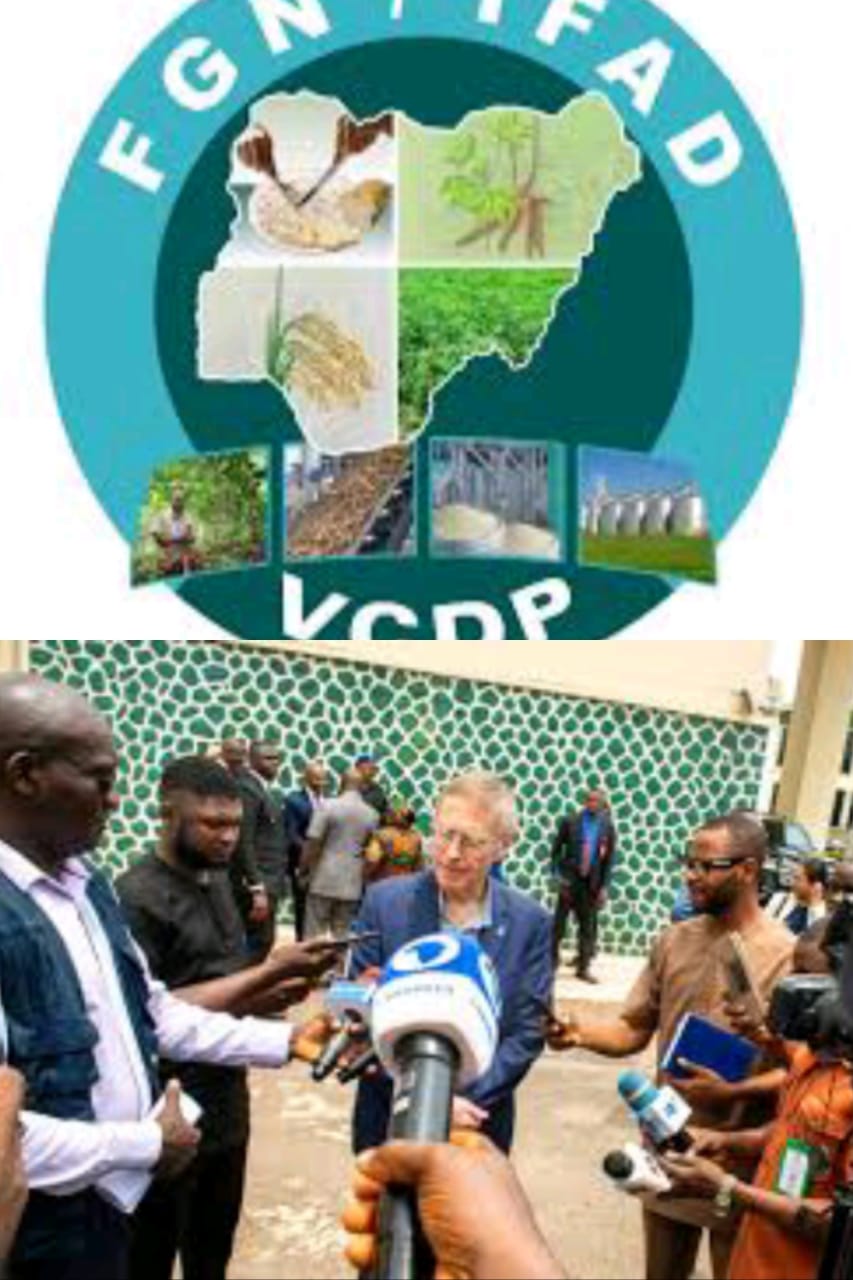
The Associate Vice President, Programme Management Department at IFAD, Dr. Donal Brown, made this when he and his team visited the Federal Government, FGN/IFAD Assisted Value Chain Development Programme, VCDP Dry Season Rice farmers in Enugu State.
The IFAD Associate Vice President, who was in Enugu for the South-East zone visited Nenwe, Aninri Local Government Area and other projects sites in the state.
Dr. Brown explained that IFAD’s investments in many sectors around agriculture were in processing, production, and training.
The IFAD Associate Vice President expressed satisfaction with the impact of its intervention programme on the lives of rural farmers in Enugu State.
He commended the resilience of the farmers, while pledging to continue to support the country to address food crisis.
Dr. Brown, who was on inspection of FGN/IFAD programmes in Nigeria, interacted with the farmers at the Chiamaka and Chinazaekpere Rice farms and expressed satisfaction with what he saw and heard.
He also expressed delight that the VCDP programme would be sustained in the state even after IFAD had existed.
Dr. Brown was particularly impressed with the ‘dry season rice farming ”noting that he would take the knowledge home.”
On the challenges they faced, Mrs. Evelyn Nwaru of Chiamaka Rice Farm said they had problem using fuel pumping machines because of high cost of fuel.
Mrs. Nwaru said after they complained, VCDP provided them with solar pumping machines.
She commended Enugu State Government , IFAD, VCDP for the programme.
At the Angel farm (Rice mill), the IFAD Associate Vice President, interacted with the women undergoing training at the IFAD/VCDP Gender Action Learning System (GALS).
They testified how VCDP training programme had empowered them and transformed their husbands to be helpful.
In a remark, the National Programme Coordinator, FGN/IFAD Value Chain Development Programme, Dr. Fatima Aliyu, also commended Enugu State Government and the farmers for their commitments toward the success of the programme.
She explained that they decided to go for the Dry season rice farming because it was more profitable while enabling it to mitigate impact of flooding that is usually associated with rainy season.
In a brief remark, the Enugu State Coordinator of IFAD/VCDP, Dr. Edward Isiwu, said VCDP operates in five local government areas in state.
Dr. Isiwu said they built rice processing centres, established Gender Action Learning System (GALS) and had trained a lot of women and youths on nutrition and other programmes.
Earlier, the Enugu State Governor, Peter Mbah, who was represented by his Deputy, Mr. Ifeanyi Ossai, appealed to IFAD to expand its support beyond smallholder farmers to commercial farmers with inputs, credit facilities and capacity building.
He said the visit was timely especially now the country was struggling with food shortages.
The Enugu State Commissioner for Agriculture and Agro-Industrialisation, Mr. Patrick Ubru, who led IFAD Associate Vice President and his team to the sites, reiterated the commitment of Governor Peter Mbah to meeting the obligations of the state in terms of payment of counterpart funding.
Some of the farmers, including Evelyn Nwaru, Cecilia Michael and
Ugochukwu Onyeabor, said the Federal Government IFAD Value Chain programme had impacted positively on their lives.
The visit took the IFAD Associate Vice President and his team to some sites, especially rice and production centres in Aninri Local Government Area and four other local government areas currently benefiting from the FGN/IFAD Assisted Value Chain Development Programme.
The International Fund for Agricultural Development (IFAD) is an international financial institution and a specialized agency of the United Nations dedicated to eradicating poverty and hunger in rural areas of developing countries.
EDITED BY CHUKWUBUIKE MADU