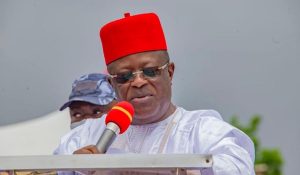
2ND NIGER BRIDGE: DO NOT EXCEED 100KM PER HOUR— FASHOLA CAUTIONS MOTORISTS
REPORTER: OBY ARINZE
The Minister of Works and Housing, Mr. Babatunde Fashola, has described the temporal opening of the 2nd Niger Bridge as a solution to the perennial traffic challenge being experienced by commuters on the First Niger bridge, especially during festive periods.
The Minister made the observation when he visited the 2nd Niger Bridge to assess the level of preparations for the opening of the bridge to traffic.
According to the Minister, there are still few things to be done before the actual event such as lane markings and completion of work at the Obosi and Asaba interchange.
Mr. Fashola explained that the bridge was constructed to complement the first Niger bridge which is being overburdened by constant and heavy vehicular movement on the bridge.
He commended President Muhammadu Buhari led administration for deeming it necessary to construct the 2nd Niger bridge as a permanent solution to the traffic challenge and as avenue for further development of the the South East region.
The Minister, however, pleaded with motorists and other road users to drive safely within the maximum speed limit of 100 kilometres per hour to avoid accidents.
The Director Highway Bridges and Design, Mr. Oluropo Oyetade, said the temporal opening of the bridge would not only ease traffic flow on the old Niger bridge but prevent the usual gridlock, which overweighs on its frameworks.
Earlier, the engineer representing the construction firm, Mr. Martins Oluwaseyi, while giving further insight on the temporal opening of the bridge, said it was only opened for road users from the West from December 15, 2022 to January 1, 2023 as well as 2nd to 15th of January 2023 for road users from the East.
The Second Niger Bridge is a multi-billion naira project, which is 96.5% completed and will be officially inaugurated in 2023
Correspondent Oby Arinze reports that toll gates on the Second Niger bridge will not be used throughout this temporal period of opening.
EDITED BY CHUKWUBUIKE MADU