GOVT’S FAILURE TO PROVIDE PORTABLE WATER RESPONSIBLE FOR CHOLERA OUTBREAKS — MEDICAL PRACTITIONER, WATER TECHNOLOGIST
REPORTER: CHIZOBA OPARA
A Medical practitioner, Dr. Shaa Okorie, has advocated provision of public safe water for citizens by various governments in other to curb the recurring cases of cholera outbreak in Nigeria.
Dr. Okorie made the call in an interview with Radio Nigeria in Owerri on the recent report by the Nigeria Centre for Disease Control (NCDC) on the rising cases of cholera outbreaks in 30 states in the country, including Imo State, with about 28 suspected cases.
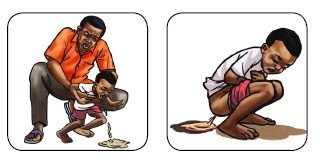
According to the World Health organization (WHO), Cholera is an acute intestinal infection that spreads through contaminated food and water.
Happily this bacterial infection that can be treated with antibiotics and fluid replacement.
However, if left untreated, it can lead to severe diarrhea, dehydration, weakness and eventual death.
Statistics from the NACDC indicated about 1,141 suspected cases of cholera with 65 confirmed cases and more than 30 deaths from 96 local government areas in 30 states in the country as at June, 2024.
The 10 states that contributed 90% to the burden of cholera include Bayelsa, Zamfara, Abia, Cross River, Bauchi, Delta, Katsina, Imo, Nasarawa, and Lagos States.
NCDC has activated the National Cholera Emergency Operations Centre (EOC) to level 2 to coordinate the national response.
However, before now, Nigeria, in 2023, according to a report by the International Center for Investigative Reporting, shows that Nigeria is one of the 13 African countries battling cholera with several outbreaks of the disease since 2021, when the country reported 111,062 suspected cases and 3,604 deaths.
The cases were reported largely among children between ages 5 and 14 across 33 states and the Federal Capital Territory.
Speaking on the level of surveillance and precautionary measures by various government and health workers to stop the recurring incidence of cholera outbreak in Nigeria, Dr. Shaa Okorie, noted that millions of Nigerians still suffered from lack of access to potable water supply and relied on unsafe water sources for use and drinking.
He suggested that the solution to controlling cholera lay in the effective management of public water and sanitation systems.
Dr. Okorie advised heath care workers to maintain standard safety precautionary practice by wearing gloves while handling patients as well as intensify surveillance efforts to promptly report suspected cholera cases.
A retired Chief Water Technologist,
Ministry of Public Utilities and Rural Development, Imo State, Mr. Chukwuma Ajuonuma observed that the government’s failure to invest in public water and sanitation had resulted in private water source by the citizens, exposing them to unsafe water.
Mr. Ajuonuma advised Nigerians to ensure that water was boiled and stored in a clean covered container before consumption and avoid open defecation, indiscriminate refuse dump, and ensure frequent clearing of sewage as measures to promote clean environment.
Above all, adhering to strict medical guidelines will certainly go far in preventing deadly outbreak of the cholera plague.
EDITED BY CHUKWUBUIKE MADU